Source note: This article is an editorially rewritten summary of a report by 海经社, originally published on . Original report: 从「一件救生衣」到「一张救援网」:华巽云作答海上搜救「四大痛点」. Facts are attributed to the original report; product specifications are subject to type-approval certificates and product manuals.
In short: According to Haijingshe, CETIG builds a satellite-IoT rescue system with positioning within 5 m and 72-hour tracking; two life jacket models hold CCS type approval.
Key facts
Four pain points
According to Haijingshe on 13 October 2026, traditional maritime SAR faces four pain points: low efficiency, delayed/inaccurate information, high cost and limited intelligence. CETIG uses a satellite-IoT command system with a three-layer network of 5G coastal, LEO ocean and GEO emergency links.
Key parameters
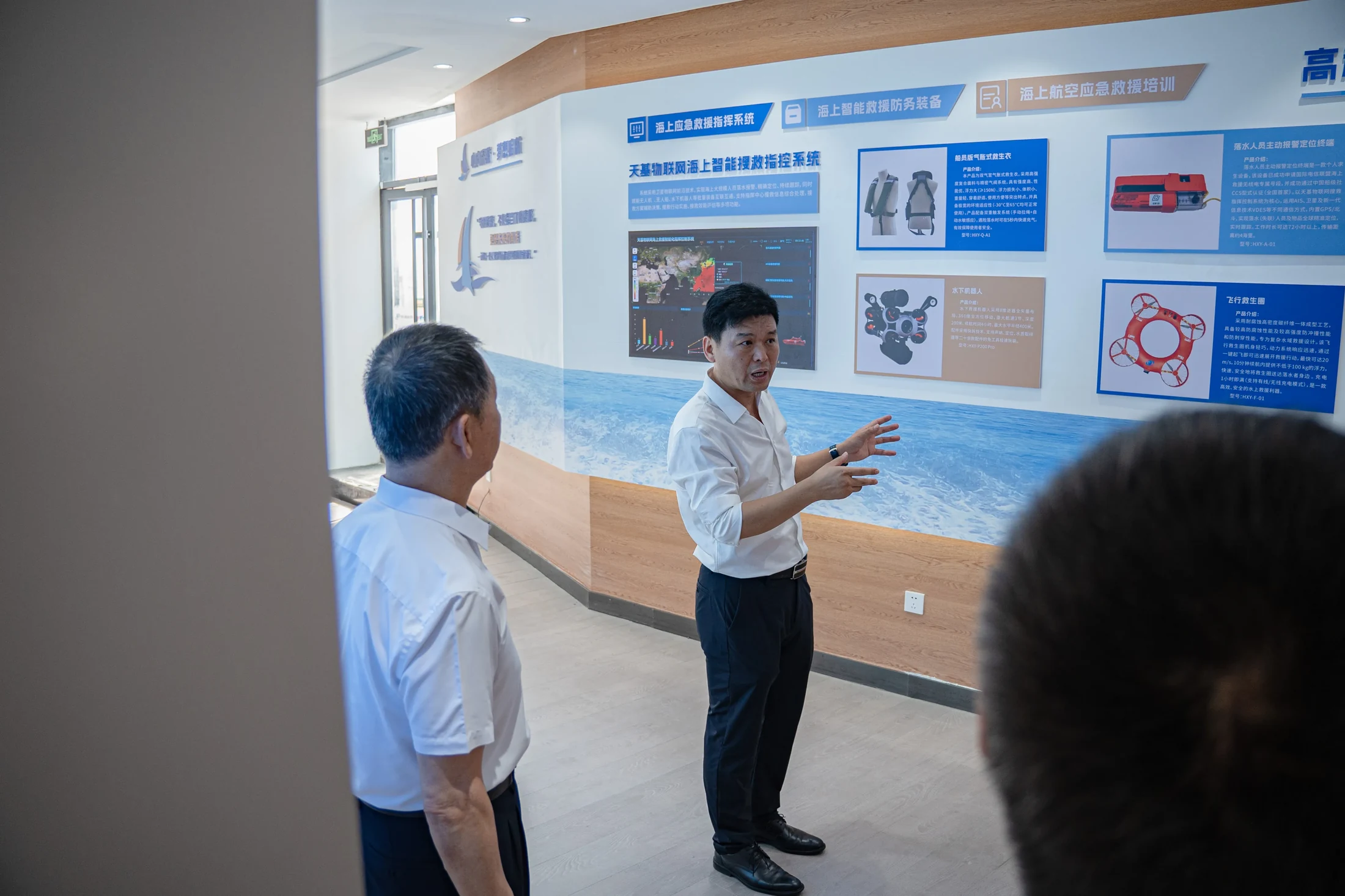
The report states positioning within 5 m and continuous tracking of 72+ hours. The man-overboard terminal integrates AIS, LEO satellite and BeiDou-3 short messages, with over 72 hours of continuous alarm operation and MIIT single-BeiDou certification.
Equipment matrix
Two life jackets hold CCS type approval: the pilot inflatable model inflates in 5 seconds, with 150N+ buoyancy and a 3200N+ lifting loop. The flying lifebuoy withstands Force 6 winds, flies 10+ minutes at up to 13 m/s, and is CCS type-approved. The rescue robot passed Sea State 3 trials with 70-minute endurance.
Related reading
CCS certification explained · How to choose a life jacket manufacturer · Marine rescue FAQ · Products