Marine life-saving equipment cannot go aboard without one document: CCS certification. Tender documents ask for a China Classification Society (CCS) certificate, owners check the type-approval number on life jackets and lifebuoys before delivery, and surveyors ask for product certificates during inspection. This guide explains what CCS certification is, which life-saving appliances need it, the types of certificate, how approval works, how to verify a certificate, and CETIG's own CCS status.
1. What CCS certification is
CCS — the China Classification Society — is the classification and statutory survey organisation under China's Ministry of Transport and a member of the International Association of Classification Societies (IACS). Besides classifying ships, CCS carries out product inspection and type approval for marine equipment: life-saving appliances, fire-fighting equipment, pollution-prevention equipment and marine materials.
In procurement language, “CCS certification” usually means two things: the product holds CCS type approval, proving the model passed the tests required by SOLAS, the LSA Code and CCS rules; and the maker can obtain a marine product certificate per batch, which travels with the goods for installation, delivery acceptance and statutory survey.
2. Which life-saving appliances need it
Under SOLAS Chapter III, the International Life-Saving Appliance (LSA) Code and IMO resolution MSC.81(70), the following normally require certification:
- Life jackets — adult, child, marine work vests and inflatable types
- Lifebuoys — including self-igniting lights and buoyant lifelines
- Life rafts — inflatable and rigid
- Lifeboats and rescue boats — totally enclosed, free-fall and fast rescue boats
- Immersion suits and anti-exposure suits
- Line-throwing appliances, buoyant apparatus, life-saving and pyrotechnic signals
Vessels under Chinese domestic rules follow the Technical Rules for Statutory Survey of Seagoing Ships, which are aligned with SOLAS but differ in a few clauses and test requirements.
3. Three certificate types — don't mix them up
- Type approval certificate — issued for a model; proves the design meets the rules and passed type testing. Most often requested in tenders.
- Factory approval certificate — issued for the manufacturer; verifies production capability and quality system, usually a precondition for type approval and batch certification.
- Marine product certificate — issued per batch or per unit after inspection, shipped with the goods for installation and survey.
Validity is stated on each certificate and normally involves annual surveillance audits. Expired certificates, or models changed without re-approval, are not accepted at survey.
4. How approval works
- Application: model, intended use, applicable standards, target vessel types.
- Technical file review: drawings, bill of materials, test programme, company standard.
- Type testing: buoyancy, strength, temperature and oil resistance per MSC.81(70) at a CCS-recognised laboratory.
- Factory audit: quality system, production and inspection equipment, product consistency.
- Certification and surveillance: type approval issued, then annual audit and renewal.
5. How to verify a CCS certificate
- Check the elements: certificate number, product name and model, manufacturer, applied standards, issuing surveyor and date, expiry.
- Search the China Classification Society website certificate lookup by certificate number or manufacturer.
- Match the model: the certified model must match the nameplate, packaging and manual exactly; modified models need re-approval.
- Match the tender or vessel: confirm the covered specification (for example 150N buoyancy) fits the requirement.
Two common misconceptions: CCS certification is not CCS classification — classification applies to ships, while equipment receives type approval or product certificates. And a CCS certificate is not CE marking: exporting to the EU still requires MED/CE type examination, and the two systems are not interchangeable.
6. CETIG's CCS certification
CETIG holds China Classification Society (CCS) certification and every CETIG product is CCS certified, type-approved to CCS rules. Certificate copies and test reports can be supplied with shipments for marine outfitting, survey and tender responses — there are no uncertified models in the range, so certificates can be submitted directly against a tender requirement. Certified models, certificate numbers and validity are as stated on the certificates; contact us to verify a specific model.
Supplier credentials and selection criteria: Life Jacket Manufacturer in China: Credentials and Selection.
Related products: Standard Buoyancy Lifejacket, Custom Pilot Lifejacket, and the full life-saving equipment range. For outfitting selection, see solutions or contact our team.
7. FAQ
Are all CETIG products CCS certified?
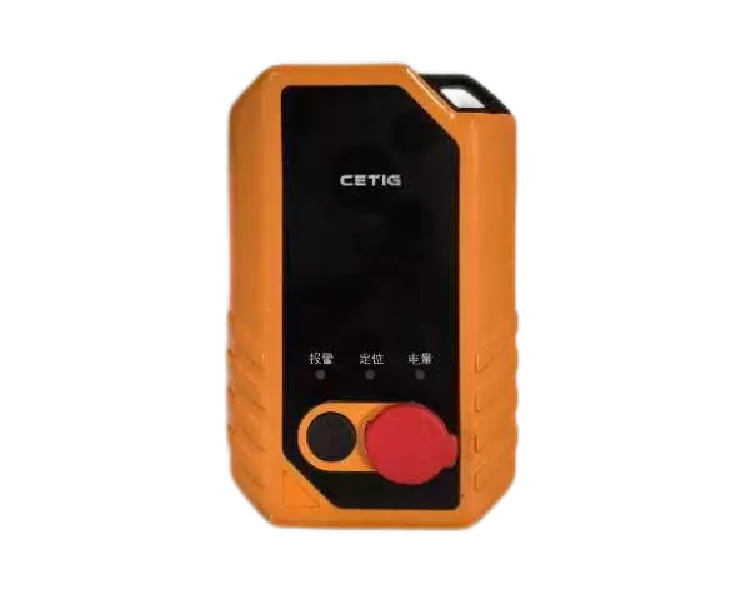
Yes. CETIG lifejacket and positioning-terminal products are certified by the China Classification Society (CCS), across life jackets, lifebuoys, life rafts, rescue boats and the intelligent life-saving equipment range. Type approval and marine product certificates can be provided per model for tenders and surveys.
How does CCS certification relate to SOLAS?
SOLAS sets the requirement; a CCS certificate is one authoritative way to prove the product was tested and approved against SOLAS and the LSA Code. Owners and surveyors look for evidence of testing and certification, and CCS is the most widely accepted route in China.
What does CCS approval test on a life jacket?
Buoyancy (for example 150N), in-water performance and self-righting, material strength, oil and temperature resistance, retro-reflective tape and whistle, and the user weight range; child models have additional requirements.
Can a CCS certificate be used for EU exports?
Not on its own. The EU market requires MED/CE type examination, typically to EN ISO 12402; the two certifications can be held in parallel.
How do we respond when a tender requires a CCS certificate?
Supply the type approval certificate covering the offered model, ship marine product certificates with each batch, and attach test reports. If originals are required for verification, coordinate with the manufacturer in advance.
Related reading: CETIG Wins CCS Certification Subsidy — 50% of First Certification Fees Reimbursed
This article is a general guide to CCS certification for marine life-saving equipment; the certified scope is defined by the certificates issued by the China Classification Society.