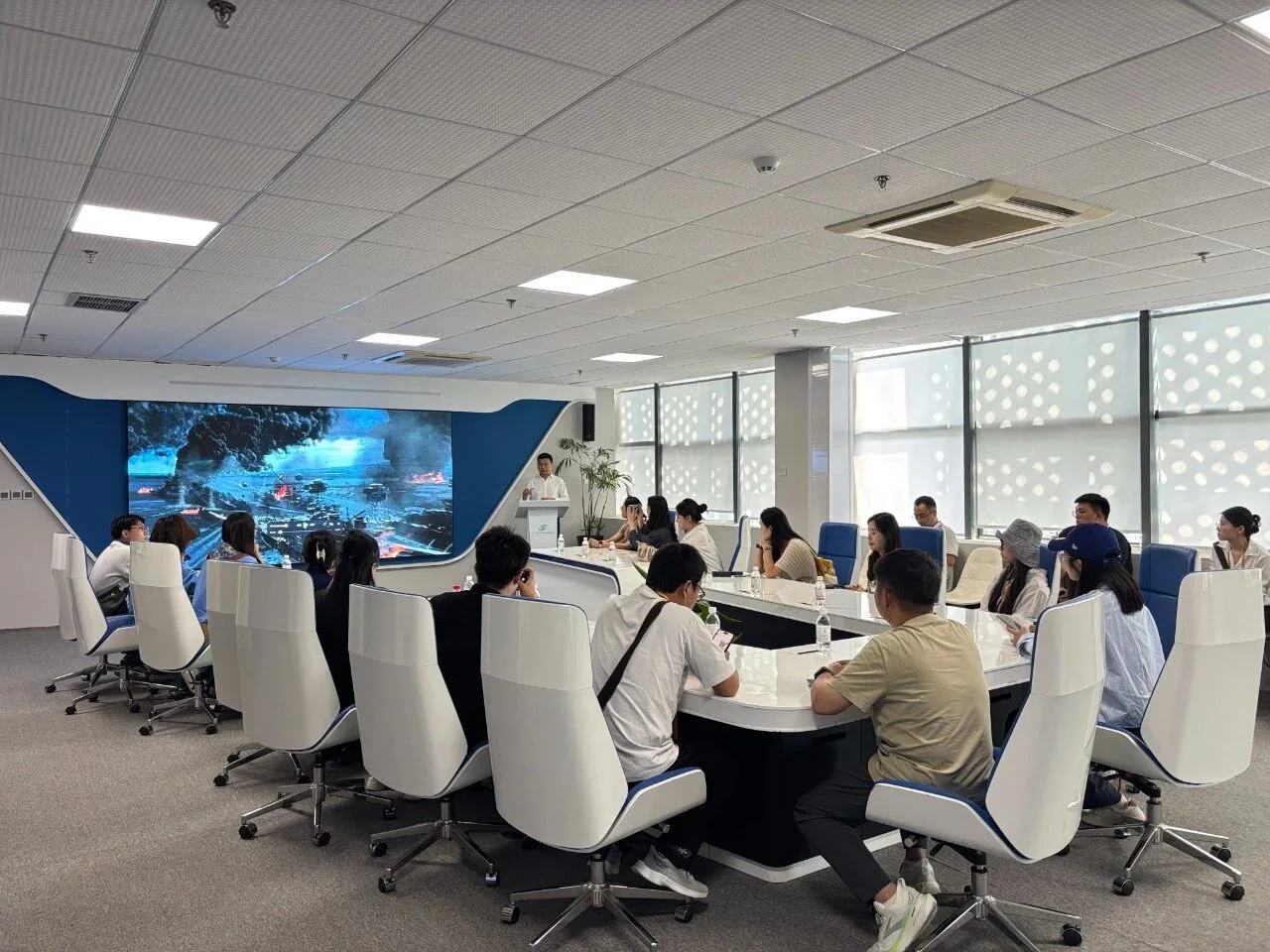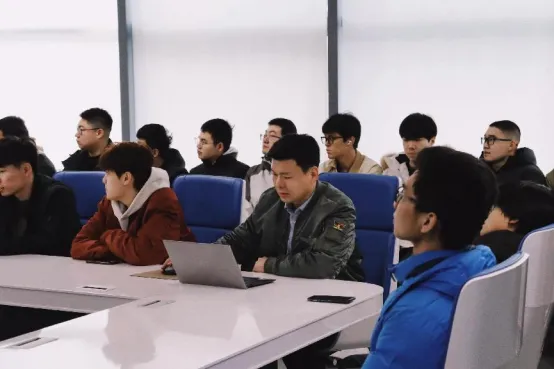
On 11 March, thirty-eight graduating students from the Southampton Marine Engineering Joint College at Harbin Engineering University visited the Maritime Rescue & Defence Collaborative Innovation Centre at CETIG. The visit offered a close look at how a marine-technology enterprise operates, how technology supports the full production process, and what capabilities the sector needs from its next generation of engineers.
A centre built on collaboration
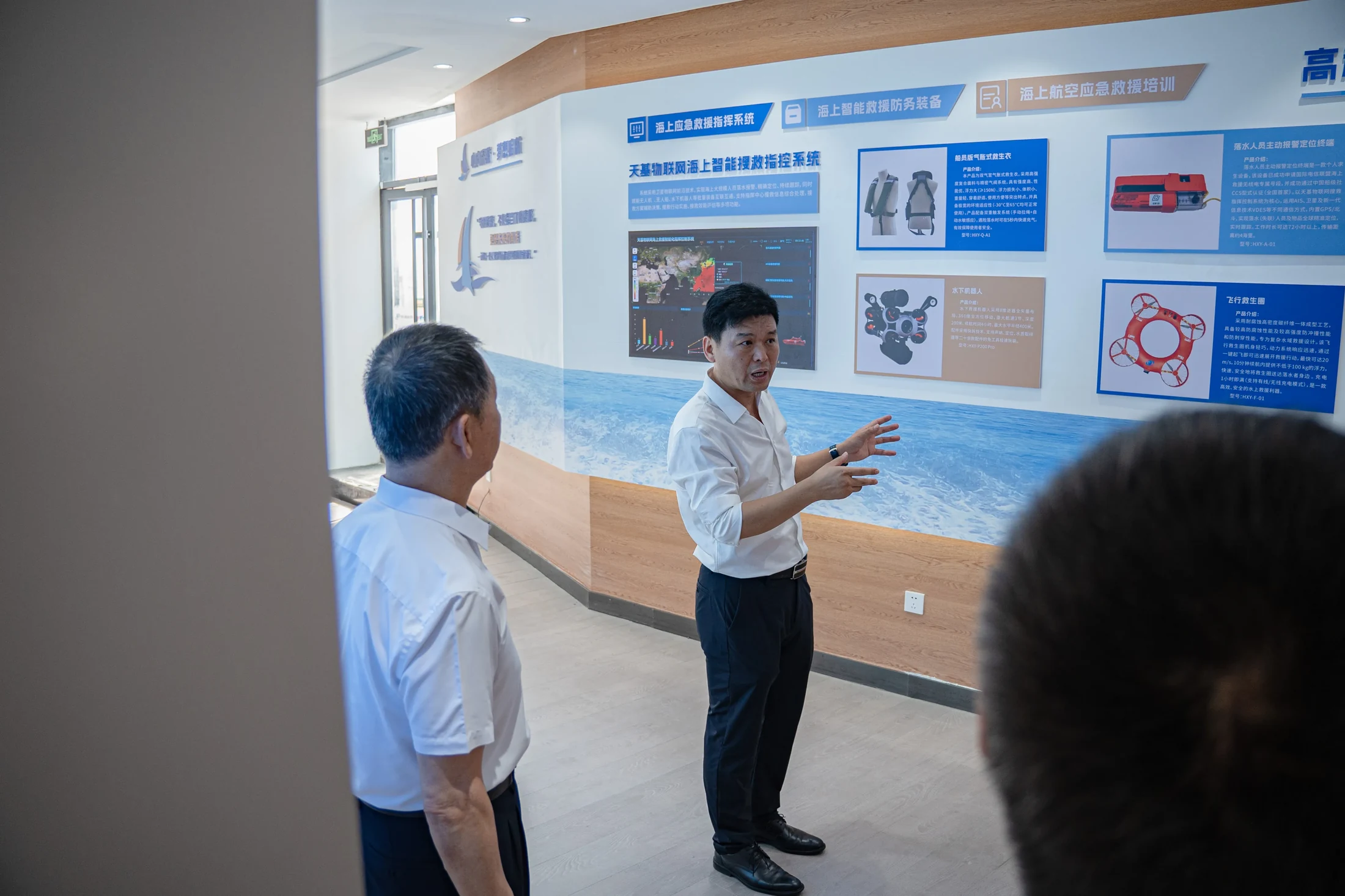
Li Peng, Director of the Centre and Chairman of CETIG, described an organisation built on satellite IoT and artificial intelligence, bringing together existing research capability through integrated innovation, government–enterprise partnership and industry alliance. Its task is to strengthen the combination of talent, research and industry, assemble multidisciplinary teams, concentrate scientific resources, deliver major research programmes and improve the handling of significant maritime emergencies.
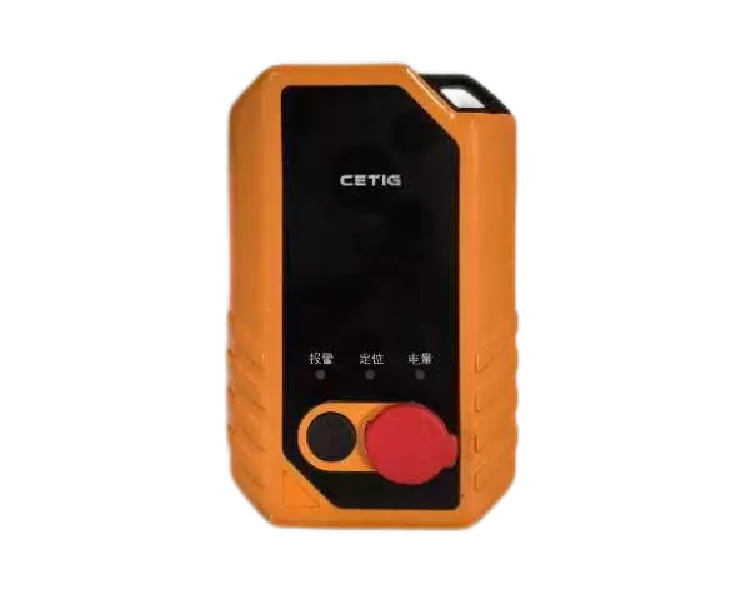
Staff demonstrated the satellite-IoT maritime intelligent SAR system alongside the AIS-MOB terminal, positioning lifejackets, surface rescue robots and maritime rescue UAVs. Deputy General Manager Cheng Guanghao traced the AIS-MOB terminal from concept through to an ITU-allocated dedicated number segment and CCS type approval, and explained why marine rescue products demand a 100% pass rate on quality. Students left with a direct appreciation of the strategic importance of rescue technology — and of the craftsmanship behind it.